Digital Onboarding: A Game-Changer for Irish Manufacturers
The Onboarding Dilemma in Manufacturing
The manufacturing sector in Ireland employs over 250,000 people and is crucial to the nation’s economy. Despite this, the industry faces a rising yearly turnover rate. This leads companies to spend between €4,000 and €8,000 on onboarding each new employee. Given the significant investment in time and resources. Given these challenges, manufacturing firms, especially in pharmaceuticals and electronics, must adopt more efficient onboarding processes. This helps them retain talent and improve productivity.
The Cost of Traditional Onboarding
Traditional onboarding methods in manufacturing involve extensive paperwork, in-person training sessions, and a long acclimatisation period for new hires. These methods are not only costly but also inefficient:
- Initial Setup Costs: High due to the need for physical materials and workspace setup.
- Training Costs: Approximately €1,806 per employee.
- Administrative Burden: Manual paperwork and in-person training tasks consume significant time and resources.
- Time to Full Productivity: It can take up to 12 months for new hires to become fully productive.
Embracing Digital Onboarding for Better Outcomes
Digital onboarding transforms the traditional process, offering a more efficient and scalable solution:
- Reduced Setup Costs: Involves moderate expenses for software licenses and digital tools.
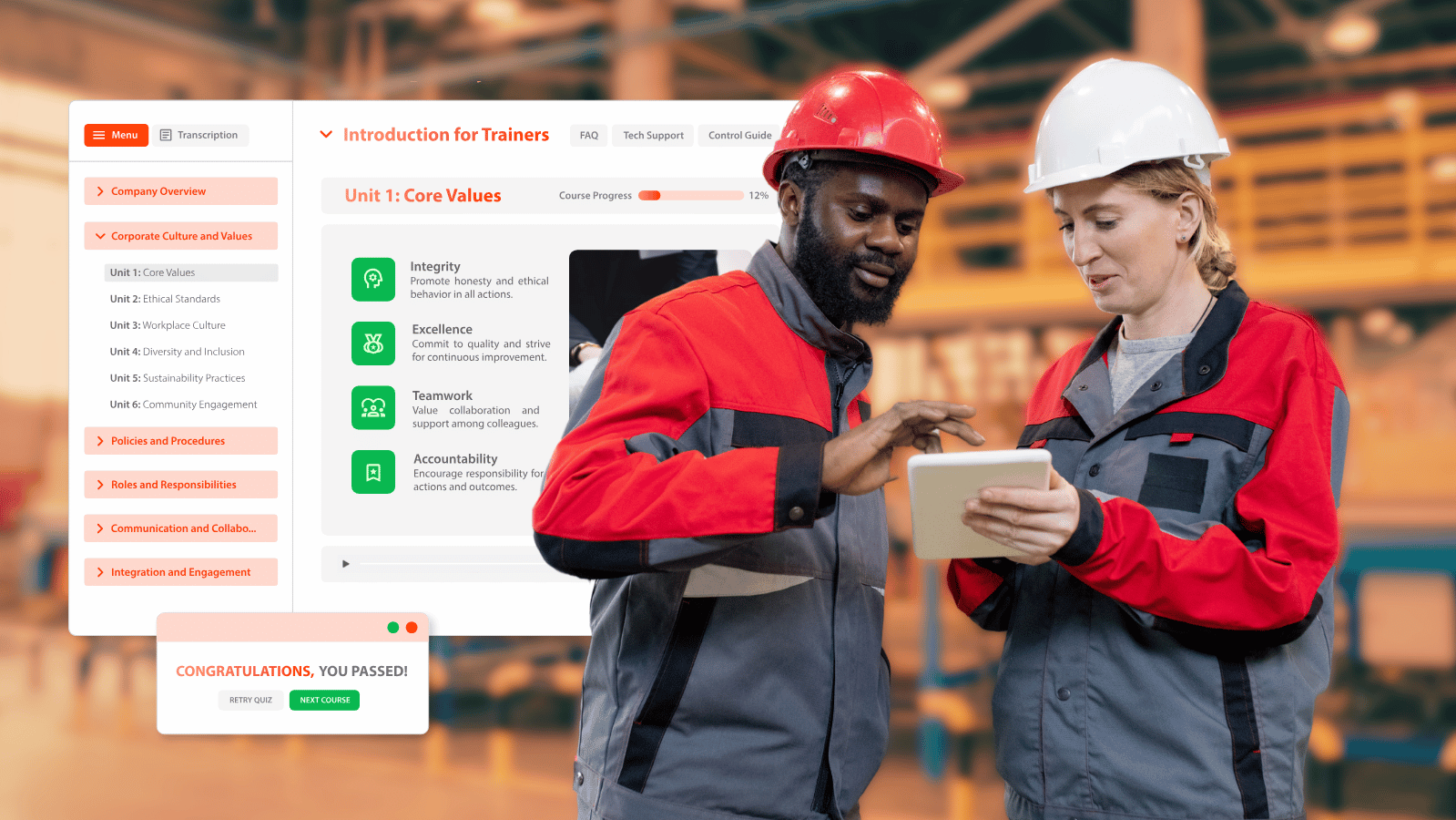
- Lower Training Costs: Utilises e-learning and virtual training modules.
- Automated Administration: Reduces the burden through digital documentation and workflows.
- Faster Productivity: Employees can reach full productivity within 8 weeks due to structured, self-paced training.
Practical Applications of Digital Onboarding Programme
Case Study 1: Pharmaceutical Manufacturing – Enhancing Safety and Compliance
A pharmaceutical manufacturing firm in Dublin faced challenges with safety compliance and lengthy onboarding processes. By implementing a digital onboarding platform, they ensured all new hires completed mandatory GMP (Good Manufacturing Practices) training through interactive e-learning modules. This approach not only ensured compliance but also reduced workplace incidents by 25%. Employees reached full productivity within 6 weeks, significantly faster than the previous 12-month timeline.
Case Study 2: Electronics Manufacturing – Boosting Technical Skills
An electronics manufacturing company in Cork needed to improve technical skill training for new hires. The digital onboarding system provided modules on specific skills such as soldering, circuit analysis, and ESD (Electrostatic Discharge) protection. New employees engaged with gamified training exercises and real-time feedback, which improved their technical proficiency. The time to full productivity dropped from 10 months to just 8 weeks, with better quality control metrics.
How EduSafe Can Transform Your Onboarding Process
EduSafe offers complete Health & Safety and HR management software. It is tailored to the unique needs of the manufacturing industry. Our digital onboarding platform streamlines the process. It gives new hires the resources they need to succeed from day one. Key features include:
- Customisable Onboarding Programs: Tailor the onboarding experience to fit the specific needs of your company and new hires.
- Role-based Training Module: Engage employees with e-learning courses and gamified training. Address the specific duties and responsibilities of the new hire.
- Automated Documentation: Ensure compliance and reduce administrative burdens with digital forms and workflows.
- Real-Time Analytics: Track the progress of new hires and make data-driven decisions to improve your onboarding process.
The Future of Onboarding in Manufacturing: Integrating Industry Trends with EduSafe
As the manufacturing industry embraces Industry 4.0, the integration of digital technologies becomes crucial. This shift impacts not only production processes but also how companies manage their workforce. EduSafe’s digital onboarding platform is perfectly aligned with these industry trends:
- Industry 4.0 and Workforce Digitalisation: As manufacturing shifts to smart factories using AI, workers must also master digital tools. EduSafe provides comprehensive training modules that familiarise employees with the latest technologies and practices.
- Focus on Employee Well-being: A supportive onboarding process that includes health and safety training is essential. EduSafe helps new hires learn safety protocols, which supports a safer workplace and boosts employee morale.
- Continuous Learning and Development: With EduSafe, onboarding doesn’t stop after the first few weeks. The platform supports ongoing training and development, ensuring that employees continue to grow and adapt to new challenges.
By adding these trends to its platform, EduSafe simplifies onboarding and helps employees prepare for the future of manufacturing.
Transform your onboarding process with EduSafe’s comprehensive Health & Safety and HR management software. Visit EduSafe to learn more and schedule a demo today.
Frequently Asked Questions
1. How long does digital onboarding typically take in manufacturing?
With a structured digital platform, new hires can reach full productivity in 6 to 8 weeks. Traditional methods can take up to 12 months.
2. How much does traditional onboarding cost per employee in Ireland?
Companies typically spend between €4,000 and €8,000 per new hire, including approximately €1,806 in training costs alone.
3. Is digital onboarding suitable for compliance-heavy sectors like pharmaceuticals?
Yes. Digital platforms can deliver mandatory GMP and safety training through interactive e-learning. This helps reduce workplace incidents and supports regulatory compliance from day one.
4. Can digital onboarding be customised for different roles on the factory floor?
Absolutely. Role-based training modules let companies tailor content to each job role. This ranges from soldering and circuit analysis in electronics to safety protocols in pharma.
5. What is Industry 4.0, and why does it matter for onboarding?
Industry 4.0 refers to the shift toward smart, AI-driven manufacturing. As factories become more digital, onboarding programmes must equip new hires with matching digital skills. Traditional paper-based processes cannot deliver this.
6. How does EduSafe support ongoing employee development beyond initial onboarding?
EduSafe’s platform supports continuous learning. It lets employees access updated training modules and development resources long after their first week.
About the author:
EduSafe Team comprises compliance specialists, safety practitioners, and digital transformation experts focused on modernising how organisations manage health, safety, and regulatory compliance.
Drawing on over 20 years of experience working with organisations across manufacturing, construction, pharmaceutical, and government sectors, the team provides insights on improving compliance workflows, reducing administrative burden, and maintaining audit-ready documentation aligned with Health and Safety Authority (HSA) standards and industry regulations.